EUDI wallet – Romania and Sweden take the final steps before the European deadline
EIDAS DigitaleSoevereiniteit, DigitalIdentity, DigitalTrust, DigitalWallet, eIDAS, eIDAS2, EUDIWallet, EuropeanBusinessWalletIn less than a month, every EU member state must offer its residents a free EUDI wallet. This follows from the eIDAS 2 Regulation (EU) 2024/1183. The deadline is 24 December 2026.
News from the past few weeks shows how differently member states are covering the final stretch. Romania and Sweden are rolling out new digital identities. In Denmark, the identity verification market is consolidating.
What the European law requires
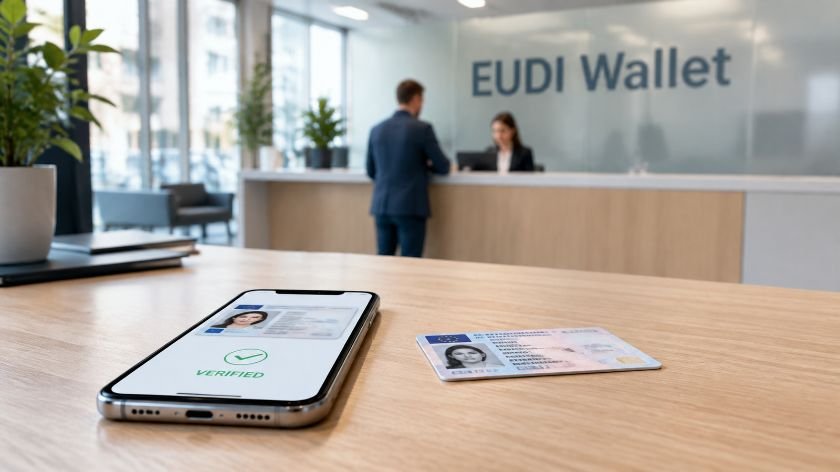
An EUDI wallet is an app you use to prove your identity online and offline. You share only the data that is needed. The regulation also prohibits a central database holding citizens’ identity data.
After the member states, it is the organisations’ turn. A year after the deadline, banks, telecom providers and other parties that require strong authentication must accept the wallet too.
Romania launches RO Wallet
Romania launches RO Wallet on 14 January 2027. The app was developed by the Ministry of Internal Affairs. Citizens can use it to carry their ID card and driving licence on their phone. The app is free and its use is optional.
RO Wallet has already passed tests with 12 other countries. Certification of the first version is expected on 22 December. A small group of users will then get a beta version.
From February, new features will be added step by step. These include qualified electronic signatures and other electronic attestations. The official launch therefore falls just after the European deadline.
Sweden launches SverigeID
Sweden launches SverigeID on 1 December. It is a state-issued e-ID at the highest Swedish assurance level, LOA4. The police issue SverigeID, linked to the new national ID card.
Residents without Swedish citizenship can also apply for SverigeID. For them, it is linked to an ID card without a travel function.
The first service you can log in to with SverigeID is Mina sidor on polisen.se. In the first phase, you can only log in. Signing will follow in 2027.
BankID joins Sweden Connect
On 16 November, the police and the Agency for Digital Government (Digg) signed an agreement to connect SverigeID to Sweden Connect. This is the national infrastructure for logging in to public services. Public bodies can add SverigeID to their services step by step.
BankID, Sweden’s most popular login method, is also joining Sweden Connect. Digg announced this on 5 November, but no date has been set yet. Municipalities, regions and government agencies will soon be able to offer BankID, Freja+ and SverigeID through a single connection.
“It should be easy for public actors to offer secure login in their digital services.” — Digg
That spread is no luxury. In March 2026, according to Swedish media, BankID was hit by a hack that leaked source code, passwords and encryption keys.
Denmark: consolidation in identity verification
Software company Twoday is acquiring Meo, a Danish provider of KYC and anti-money laundering software. Meo has a strong position in the Danish legal sector.
Meo joins Addo Sign, Signom and Ciceron in Twoday’s Nordic Digital Identity Management portfolio. Digital signing, digital forms, identity verification and compliance will come from a single provider. Twoday also plans to expand Meo into other sectors and European markets.
What this means for you
The EUDI wallet is not just for citizens. Organisations that identify customers, suppliers or employees gain a reliable new tool. With a wallet, you no longer need to store a copy of an ID document, and what you don’t store can’t leak.
So map out now where you check identities, which data you keep in the process, and when your organisation must accept the wallet.
For more information, read the articles from Garrigues, Euronews România, StartupCafe, Puterea, Polisen on SverigeID, Polisen on Sweden Connect, Hurbra, Biometric Update and Addo Sign.


